
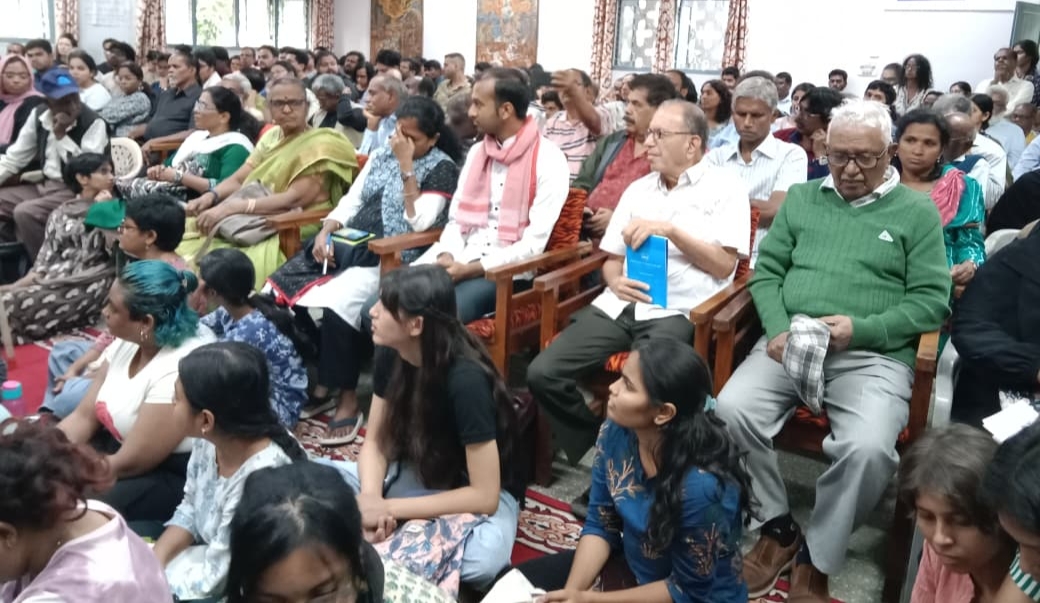
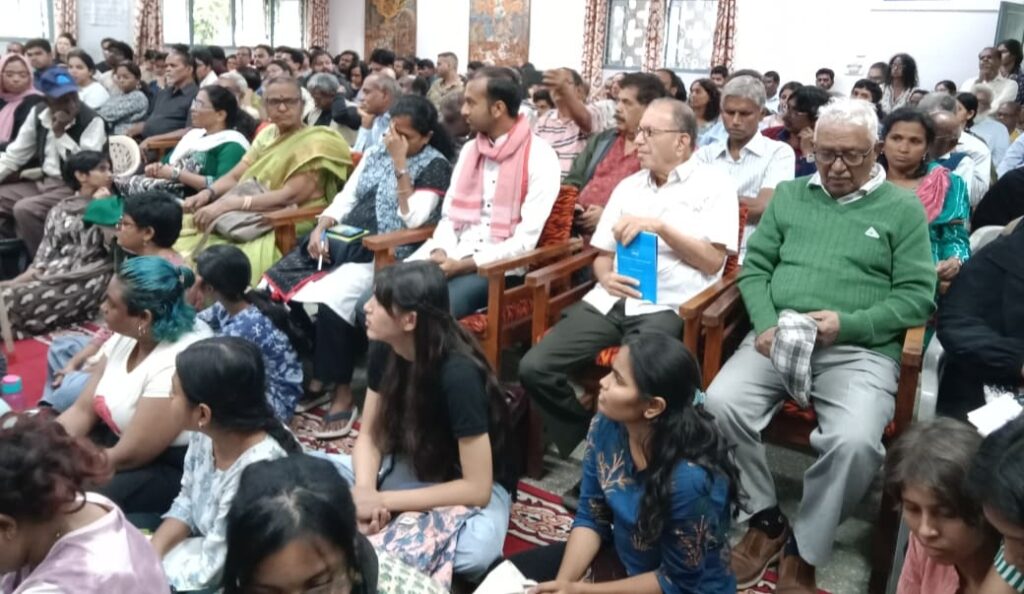
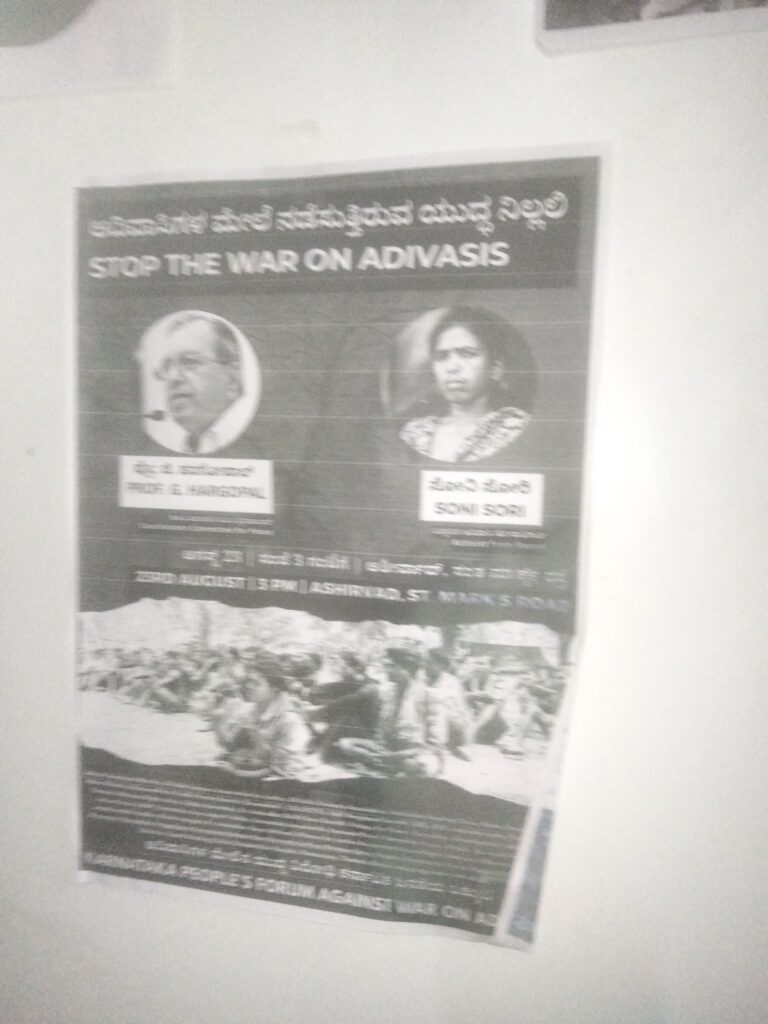
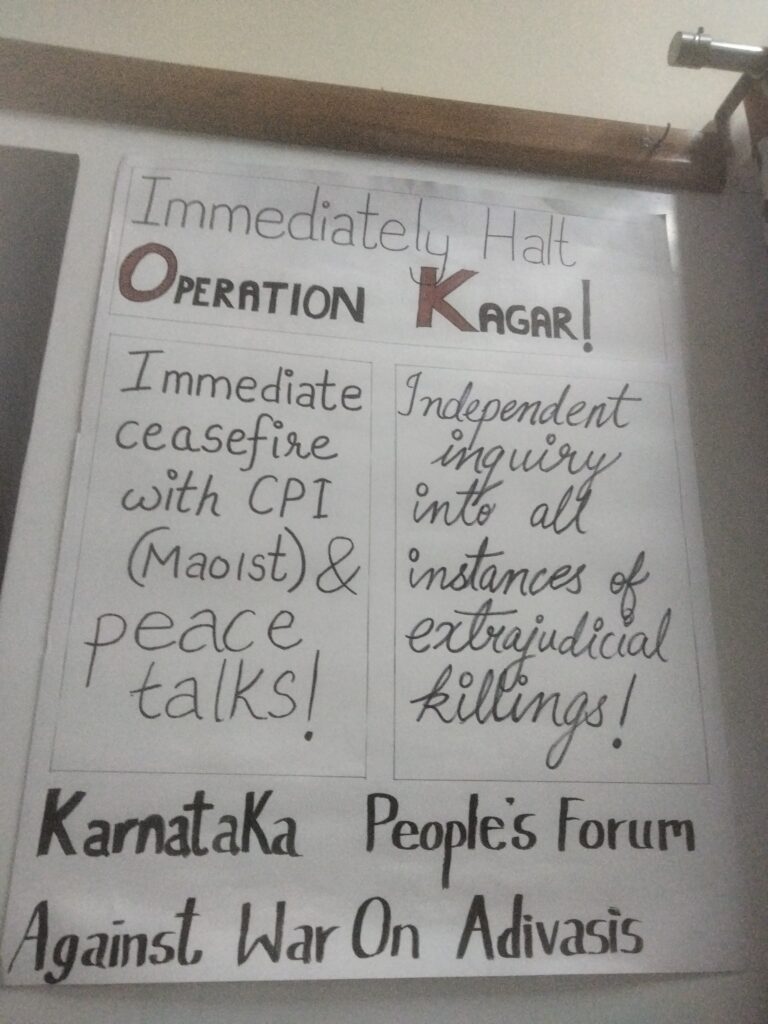
Banglore : The ongoing Operation Kagar is a war on Adivasis and mineral resources of Central India, which has led to the death of 500+ innocent Adivasis as well as combatants. In the context of mining and deforestation, militarisation is used to facilitate resource loot. In this context, Karnataka Peoples Forum Against War on
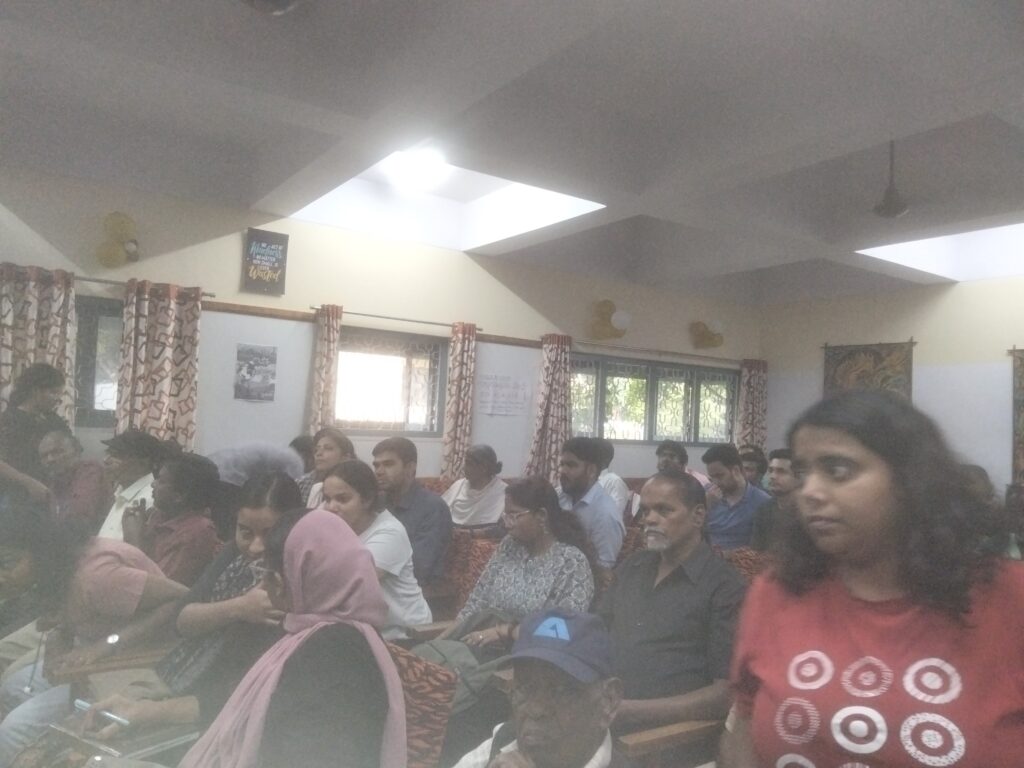
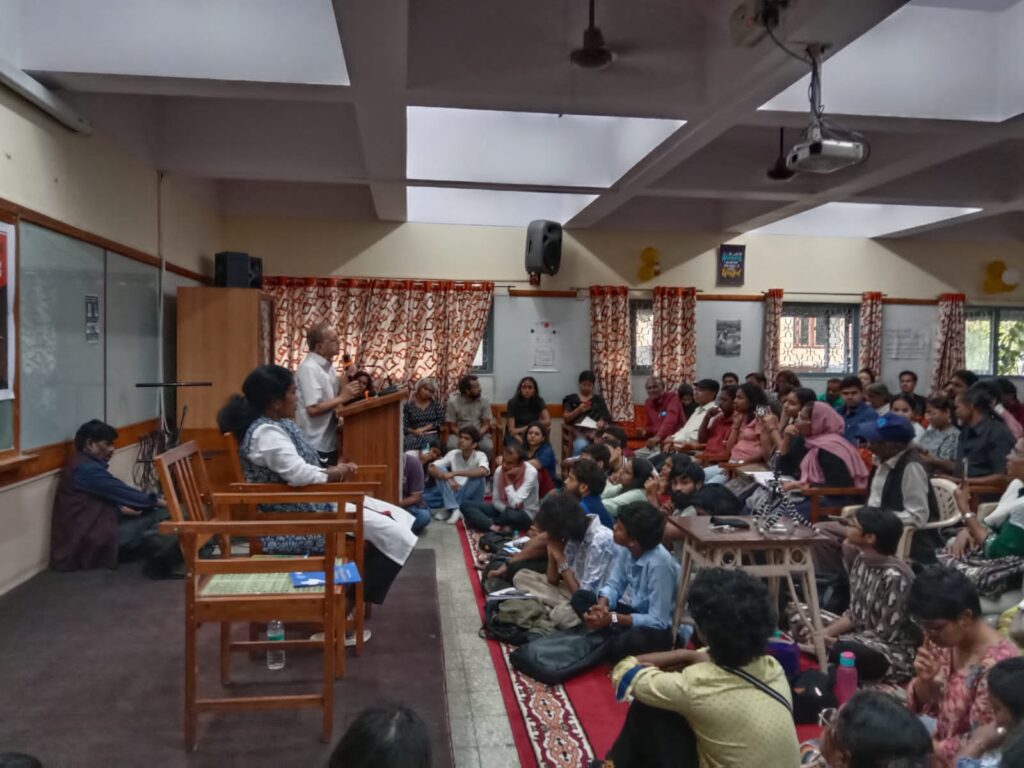
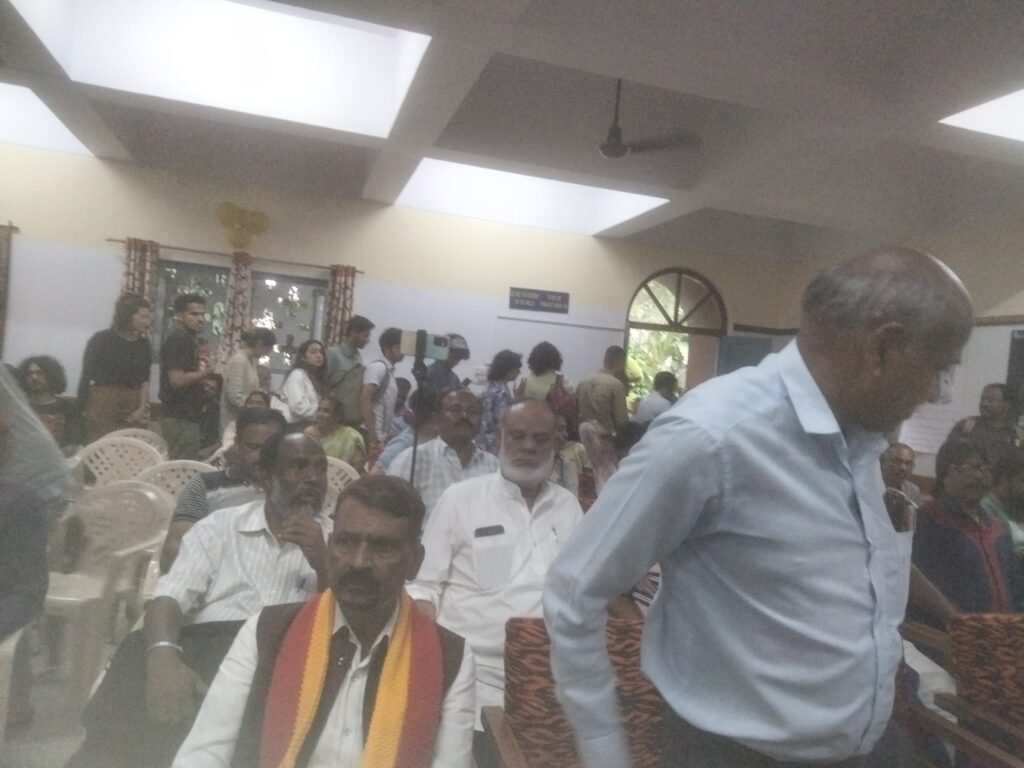
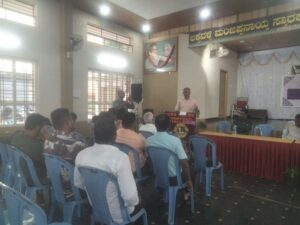
Adivasis organised a public discussion on Operation Kagar and the ongoing issues of corporatisation, militarisation and peace processes.
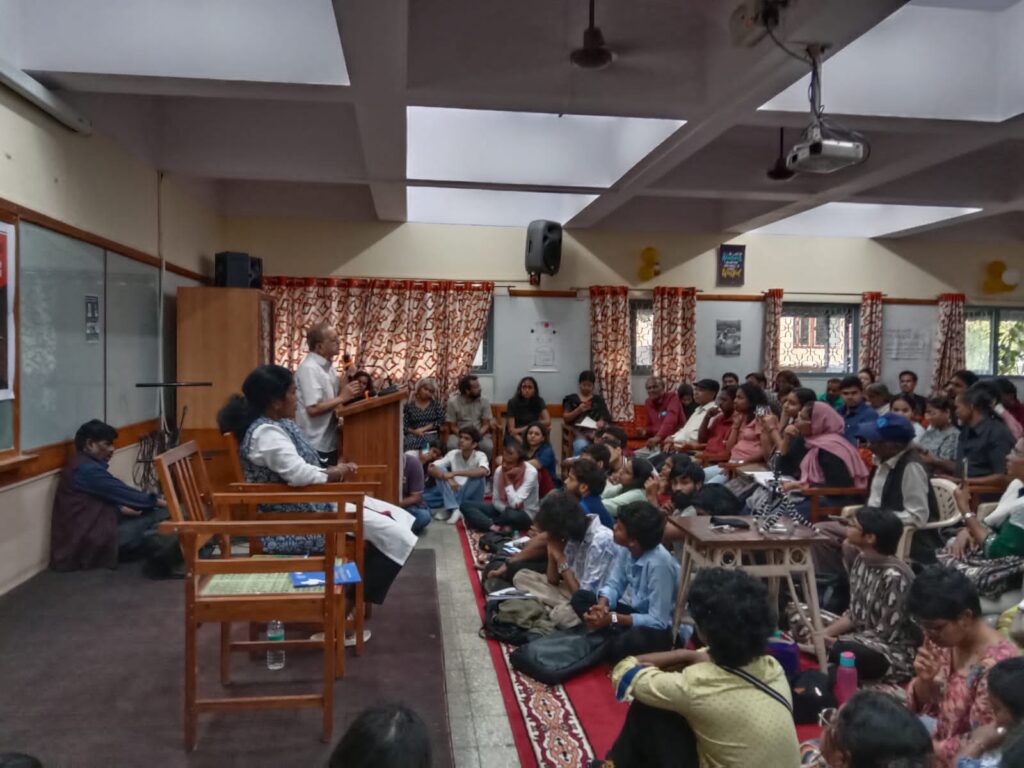
Professor Nagaragere Ramesh (People’s Democratic Forum) noted introduced the programme. He stated that corporate capitalism and communalism are the twin dangers that the country is facing today. He expressed his hope that these attacks will be defeated through people’s movements. He referred to the recent victory of farmers in Devanahalli against the capitalist ploy to snatch their fertile agricultural lands. He said that it is high time that the country raises its voice against the attack on our Adivasis brothers and sisters, whether through Operation Kagar or in other forms. He concluded that through this programme, we raise our united voice against the assault on Adivasis.
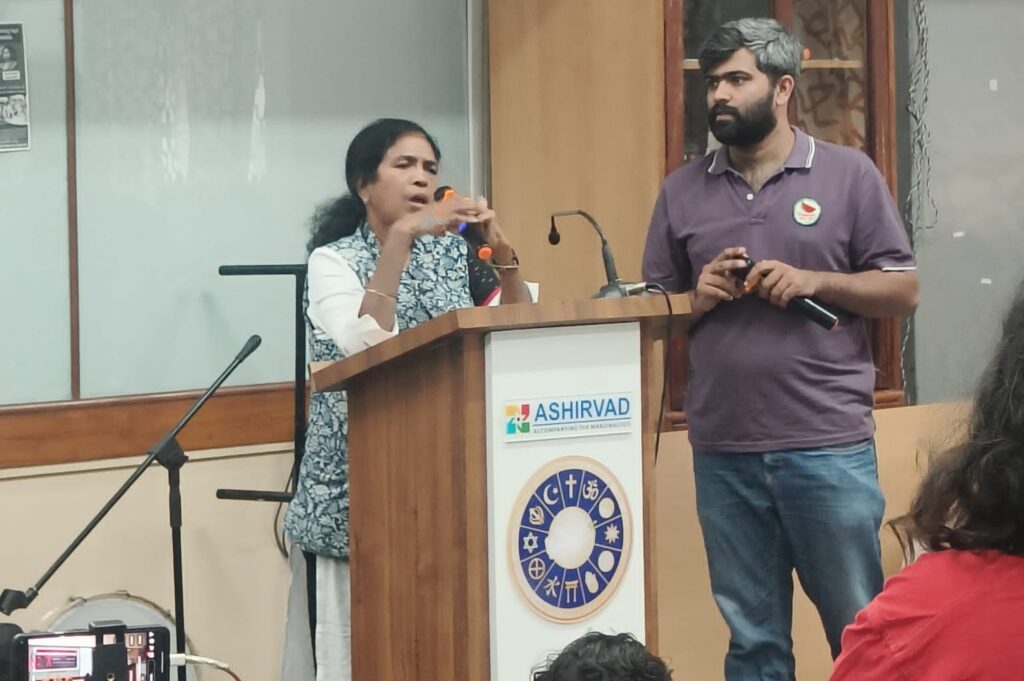
Soni Sori, Activist from Bastar noted that the targeting of Adivasis is not an isolated incident. Operation Kagar is the newest in a line of assaults, preceded by Operation Greenhunt, and Salwa Judum. Throughout this time, whether in Bastar or other tribal areas, Adivasis have lacked structural support, both legal and socioeconomic, and have been thrown into jail, or faced state violence en masse. For Adivasi women, the situation is much worse. She noted that she herself is a survivor of violence at the hands of the State and in jail. She spoke of extreme repression, rape and fake encounters. How many lakhs of people must be hunted down or
raped? She termed the current situation, nothing less than a genocide, a war against Adivasis.
Through a narration of several anecdotes, she raised questions regarding the core attack on the Adivasis and the illegal ways in which the relevant laws are being violated. Families are not informed when Adivasis are killed, but corpses are given mass burials. She also noted that at its core, the issue is one of land grab by
State and corporate forces. Adivasis who have lived here for generations on end are facing a war-like situation, are forced to flee. Children in the womb are able to hear the death cries of their fathers and the
panic of their mothers.
She said that Adivasis are not fighting for money or status, they are fighting for their basic human rights. The so-called War against Maoists is nothing but a blatant war against innocent Adivasis, which can never end until the tyranny on Adivasis stops. The voice of resistance may be feeble now, but it will be amplified from
all corners of the country if this reign of violence on Adivasis does not end. Adivasis have equal rights as all others. Adivasis are stretching their hands and are requesting for support and help from all avenues. It is only if Adivasis remain that the forest can remain, and vice versa.
Prof. G. Hargopal (Coordination Committee for Peace) started by speaking of the decreasing space for open
discussion even in educational and journalistic spaces over the years. He said that history shows that once reckless violence at the hands of the state starts it cannot be controlled. This is something that all of us must be concerned about- what is happening in Chhattisgarh will not stop there, but will soon happen across the
India. He also referred to the genocide in Palestine. He said that conceptually, we trust the State, which has a monopoly on arms holding and has institutionalised
force, only because its weapons are constrained by force of law. In Chhattisgarh, when the state uses its
weapons recklessly, outside the limits of law with impunity, there is no difference between State violence and private violence.
He reiterated the continuous demand for peace talks. It is valuable inasmuch as the futile loss of life may cease. But these talks also improve our democratic space. The state is now weakening and controlling all institutions including the judiciary, the election commission, the information commission, the media.
Democracy is the casualty. Chhattisgarh peace talks must influence the fundamental relations between people and the State, where State violence is normalised. The state refers to violence by Maoists, but who killed Gauri Lankesh, Pansare, Kalaburgi? It was not the Maoists. We must build a society which is more humane. It is the unique worth of
our species that we can create a humane society.
Organised by: Adivasi Sangharsh Morcha, All India Lawyers Association for Justice, All India Students Association, Ambedkar Reading Circle, Bhima Sangatanegala Maha Okkutta, Bhooswadhina Virodhi Horata Samithi (Devanahalli), COLLECTIVE, Dalit Sangharsh Samithi (DSS), DSS (Ambedkarvada), Dalith Tigers,
Domestic Workers Rights Union, Eddelu Karnataka, Dr. Ambedkar Dalith Sene Samithi, Fridays For FutureKarnataka, Growthwatch, Indian Social Action Forum (InSAF), Karnataka Jana Jagruti Vedike, Karnataka Janashakthi, Kannada Planet, Karnataka Voice of Public, Karavali Karnataka Janabhivriddhi Vedike,
Moolnivasigala Dr. Ambedkar Sene, National Alliance for Justice Accountability and Rights, National Alliance
of People’s Movements- Karnataka, Pragatipara Karnataka Kattada Karmika mattu Eethara Nirmana Union,
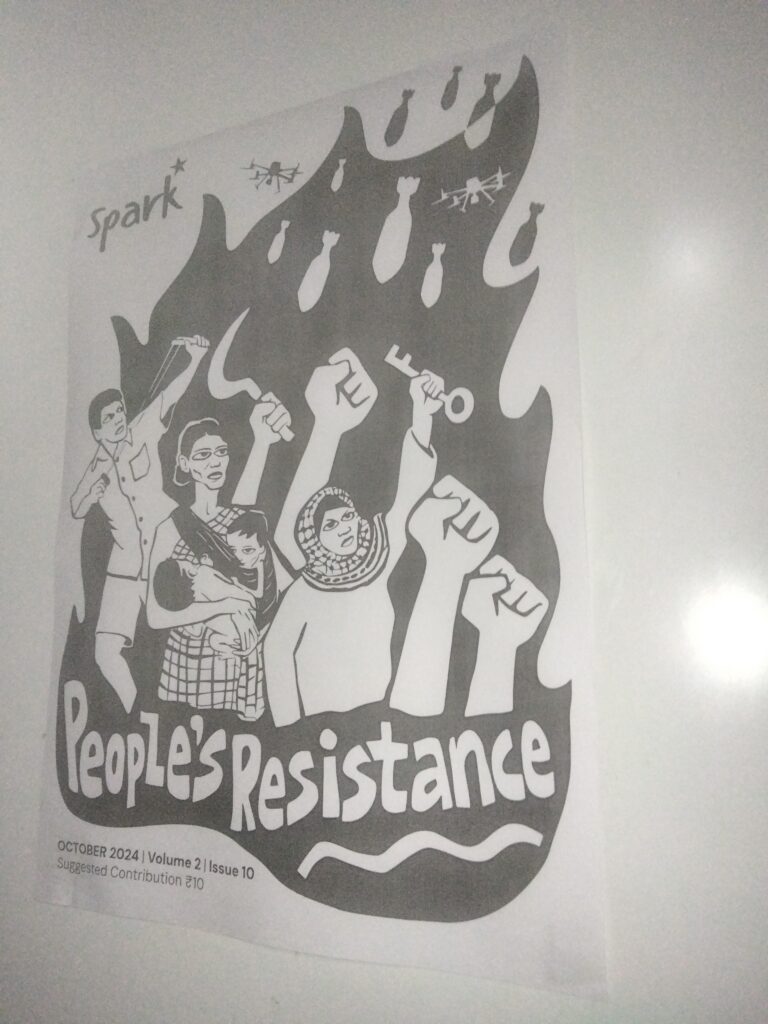
People’s Democratic Forum, People’s Union for Civil Liberties, Spark Reading Circle, Students for People’s
Democracy, Thamate Media, and progressive individuals





Leave a reply